Chimney Repairs in Winchester: What Commonly Goes Wrong and What It Costs
Winchester has a high proportion of period and pre-war housing compared to many Hampshire towns - Victorian and Edwardian terraces, interwar semis, and older stone buildings, many of which have chimneys that haven't been professionally inspected in years. A chimney that looks fine from the street can have significant mortar failure, lead flashing that's lifted, or a haunching cap that's cracked through and letting water in at the very top. The problem with chimney defects is that water entry at the top of the stack tends to show itself inside the property well after damage has started accumulating.
What Commonly Goes Wrong on Winchester Chimneys
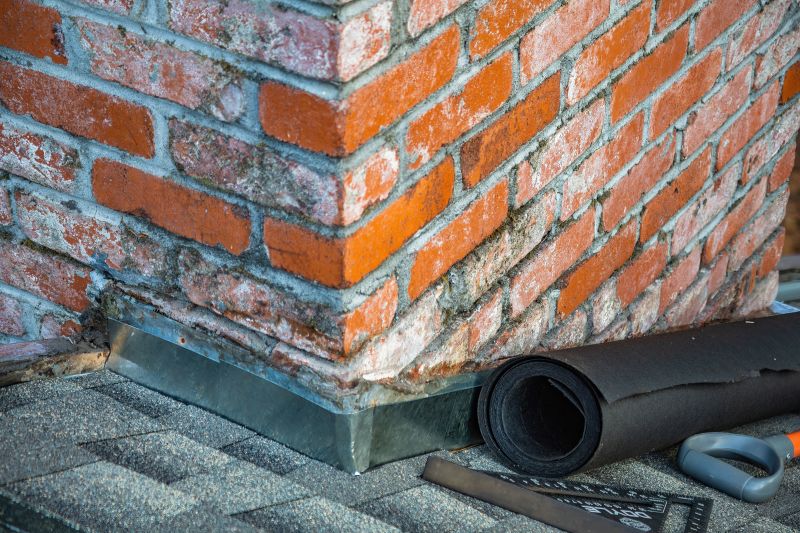
Mortar joint failure. The pointing between bricks on a chimney stack is exposed to more weathering than almost any other part of the building - wind, rain, frost, and solar expansion and contraction all affect it. Winchester's exposure to southwest weather means chimney pointing typically needs attention every 20-30 years. Gaps in mortar joints allow water to track into the brickwork, and repeated freeze-thaw cycles widen the gaps progressively.
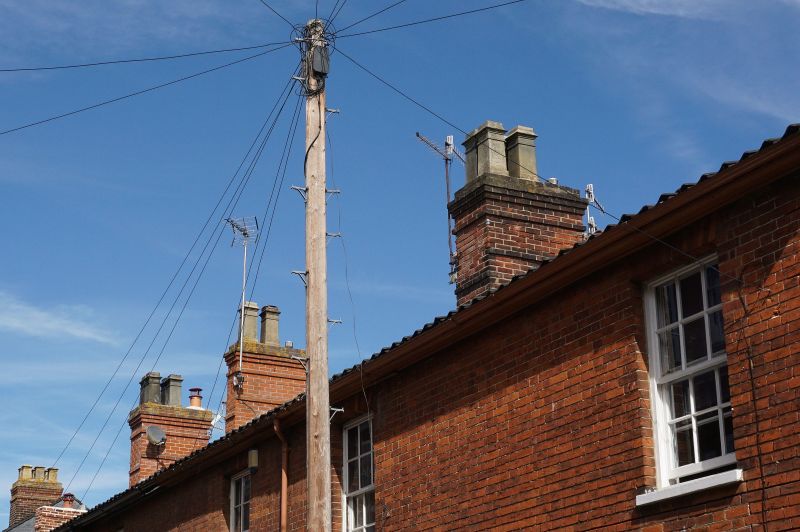
Haunching failure. The haunching is the mortar flaunching that surrounds the base of chimney pots, sealing where the pots sit in the stack. It's a large exposed area of mortar and it cracks as it ages. Cracked haunching is a common water entry point that often doesn't show any symptoms inside until the stack brickwork below is saturated.
Lead flashing failure. Where the chimney stack meets the roof slope, lead flashing seals the junction. Lead has an excellent lifespan but eventually fatigues, develops cracks, or - particularly on older Winchester properties - was installed with insufficient lap into the mortar joints and has pulled loose. A flashing that's lifted or cracked at the back of the stack (the most common failure point) allows water to run directly into the roof void at the point where roof and chimney meet.
Chimney pot defects. Cracked or missing chimney pots, or pots that have become loose in their haunching, allow rain to enter the flue directly. Pots on unused chimneys should be capped - an open, unused flue is an invitation for water, nesting birds, and heat loss in winter.
Brickwork spalling. Frost damage to the face of bricks is a longer-term problem that develops when water penetrates joints and then freezes. Spalling bricks lose their face and become increasingly porous. Once significant spalling has occurred, repointing alone isn't enough - individual bricks may need replacing.
What Can Be Done From the Ground and What Can't
Binoculars from the garden give a reasonable view of chimney condition from ground level. Obvious mortar gaps, visible cracks in the haunching, or lead flashing that's clearly lifted are all identifiable. What you can't reliably assess from the ground is the condition of the back of the stack (facing away from you), the underside of the lead flashings, or whether the internal face of the stack has any dampness.

A close inspection from scaffold or a cherry picker is the only reliable way to assess a chimney fully. Roof Repairs Winchester includes chimney inspection whenever scaffold is erected for other work - it adds no time and avoids a return visit.
Repair vs Rebuild
Most Winchester chimney problems are repairable without rebuilding the stack. Repointing, lead flashing replacement, and new haunching cover the majority of defects.
Rebuilding makes sense when brickwork has spalled extensively and can no longer hold mortar, when the stack has become structurally unstable (uncommon but occurs on very old stacks), or when the total cost of repair approaches the cost of a partial or full rebuild. A stack that needs all of repointing, new haunching, new lead flashing, and significant brick replacement may be better rebuilt from roof level upwards.
What Chimney Repairs Cost in Winchester
Repointing (full chimney stack repoint): £400-£900 depending on stack size and access.
Haunching replacement: £200-£500.
Lead flashing replacement (full perimeter): £500-£1,000 depending on stack dimensions and lead weight used.
Chimney pot replacement: £150-£350 per pot supply and fit.
Partial stack rebuild (from roof level): £1,500-£3,500 depending on height and brick specification.
All prices assume scaffold access where needed for a typical Winchester two-storey property.
FAQ
Q: How do I know if my Winchester chimney is letting in water?
The most common signs are damp patches on the chimney breast wall inside the property, a musty smell from a fireplace that hasn't been used recently, or staining on the chimney breast plaster. Damp at the chimney breast is sometimes misidentified as rising damp - it's worth confirming the source before treating.
Q: Do I need to use the chimney for it to need maintenance?
No. Unused chimneys still need maintenance - the stack is still exposed to weather and will still deteriorate. Unused chimneys should have pots capped to prevent water and bird entry into the flue. The external stack still needs pointing and haunching maintenance on the same schedule as an active chimney.
Q: How often should chimney pointing be done in Winchester?
Every 20-30 years for a well-maintained stack in reasonable exposure. Winchester's position with exposure to southwest weather means stacks can need attention at the shorter end of this range, particularly on elevated properties or those on the west-facing side of a hill.
Q: Can I cap an unused chimney pot myself?
Chimney cowls and caps are available as DIY products, but accessing the stack safely to fit them requires proper equipment. Working at height on a chimney without appropriate access is a significant safety risk. Including cap fitting when scaffold is up for other work is the practical approach.
Q: How long does lead chimney flashing last?
Lead has a long lifespan - 60-100 years is possible when correctly installed and maintained. Many Winchester period properties have original or early-replacement lead that's still serviceable. Failure usually occurs at joints, at the back gutter (the lead channel between the back of the chimney and the roof slope), or where flashings have insufficient depth into the mortar joints.
Ready to work with Roof Repairs Winchester?
Let's connect! We’re here to help.
Send us a message and we’ll be in touch.
Or give us a call today at 01962 462074
Agency Contact Form
More Marketing Tips, Tricks & Tools