Flat Roof Replacement Costs in Winchester: EPDM, GRP and Felt Compared 2026
Flat roofs make up a surprising share of Winchester's roof area - extensions, garages, dormers, and the rear additions that were bolted onto period houses across Highcliffe, Stanmore and Weeke through the 1960s to 1980s. Three-layer built-up felt, the standard covering of that era, has a design life of 12 to 20 years. Most of what is still in service locally is well past 40. Replacement on a typical 15 square metre garage or extension roof runs £1,100 to £2,600 depending on the system, and the choice of covering matters less than two things almost nobody asks about: the falls, and the insulation. Here is how the three main options compare and what actually decides how long the roof lasts.
What Flat Roof Replacement Costs in Winchester in 2026
Prices assume a straightforward strip and re-cover on a sound deck.
On a 15 square metre garage or single-storey extension: torch-on built-up felt £1,100 to £1,800, EPDM rubber single-ply £1,400 to £2,200, GRP fibreglass £1,600 to £2,600, and single-ply PVC or TPO £1,700 to £2,800.
On a larger 30 square metre extension roof: felt £2,000 to £3,200, EPDM £2,500 to £3,900, GRP £2,900 to £4,600.
Add for the things that are often needed and rarely quoted. Replacing a rotten deck is £35 to £70 per square metre. Correcting inadequate falls with tapered insulation adds £400 to £1,200. Bringing insulation up to current building regulation standard on a warm roof build-up adds £45 to £90 per square metre. New trims, drips and a proper edge detail add £180 to £450.
A realistic all-in figure for a 15 square metre Winchester extension roof, done properly with new insulation and corrected falls, is £2,200 to £3,800. Roof Repairs Winchester will survey the deck and the falls before pricing, because a quote given from the ground is a quote for the covering only.
EPDM: The Default for Domestic Work
EPDM is a synthetic rubber membrane, laid in a single sheet with no field joints on most domestic roofs. That single fact is why it has taken over domestic flat roofing over the last fifteen years.
A 15 square metre garage roof can be covered by one piece of EPDM, so there is nothing to fail at a seam. It handles thermal movement well, which matters on a UK roof that swings from minus 5 to plus 50 degrees at the surface across a year. Typical manufacturer guarantees run 20 years and realistic service life is 25 to 35.
Its weaknesses are honest ones. It is not walkable in the way a GRP roof is, so a roof used as a terrace needs a separate walkway layer. It is a matt black finish that some people dislike on a roof visible from an upstairs window. And it is vulnerable to sharp impact - a dropped roof tile or a branch can puncture it, though repairs are simple and cheap.
Installation is the variable. EPDM goes down with contact adhesive, and it needs a dry deck and reasonable temperature. A roof laid in damp November conditions by someone hurrying is where EPDM failures come from, not the material.
GRP Fibreglass: Harder, Trickier to Get Right
GRP is glass fibre matting laid into a polyester resin and cured in place, forming a rigid seamless shell. It is genuinely hard-wearing, walkable, and can be finished in a range of colours including a grey that suits Winchester's period stock better than black rubber.
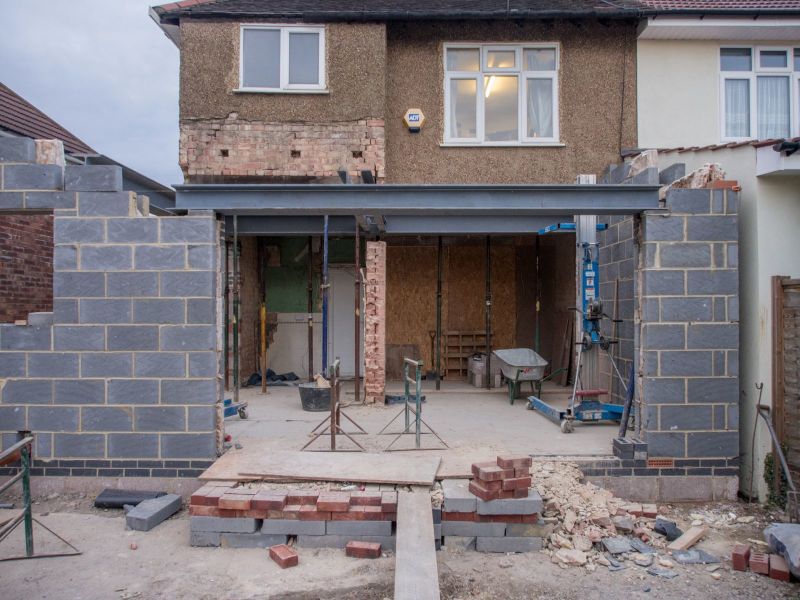
It suits balconies, roof terraces, and any flat roof that gets foot traffic. Typical guarantees run 20 to 25 years and realistic life is 25 to 30.
The catch is that GRP is far more sensitive to installation conditions and workmanship than EPDM. The resin has a working time measured in minutes, it must be applied above about 5 degrees and on a completely dry deck, and the deck itself must be an approved OSB3 or plywood laid to tight tolerances. It is also rigid, so it cannot accommodate much movement - on a deck that flexes, GRP cracks where EPDM would stretch.
The most common GRP failure in this area is hairline cracking at the junction between the roof and an upstand or trim, caused by differential movement. It is repairable but it recurs unless the underlying movement is addressed.
Felt Is Not Obsolete, But It Is Bottom of the List
Modern torch-on felt is a substantial improvement on the 1970s pour-and-roll systems, with polyester-reinforced SBS-modified bitumen in two or three layers. It is the cheapest option, it is easy to repair, and any roofer can work with it.
Realistic life is 15 to 25 years for a good three-layer system. It is the right answer on a low-value garage where budget is the deciding factor, and the wrong answer on an extension over a habitable room.
Falls: The Thing That Actually Decides Lifespan
A flat roof is not flat. It needs a fall to shed water, and the standard is a minimum designed fall of 1:80, built to 1:40 in practice to allow for deflection in the deck and structure.
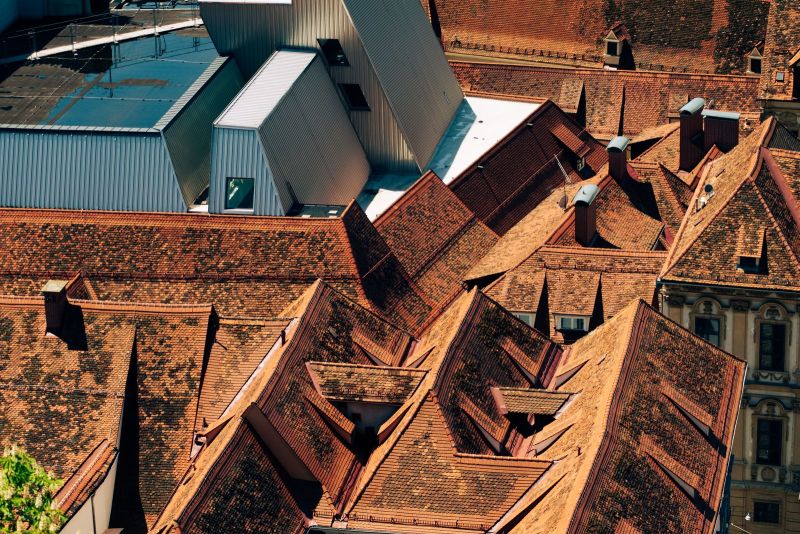
An enormous number of Winchester's 1960s to 1980s extension and garage roofs were built essentially dead level. Water sits in ponds, and standing water accelerates every failure mode there is: it degrades the membrane, finds any pinhole, freezes and expands in winter, and grows algae that holds more water.
If your existing roof has ponding - puddles still present 48 hours after rain - correcting the falls is not optional if you want the new roof to last. Tapered insulation is the usual solution, adding £400 to £1,200 on a domestic roof and roughly doubling the working life of whatever goes on top.
This is the single most useful question to ask a contractor: what fall does the existing roof have, and what will it have when you finish? A quote that does not mention falls has not looked properly.
Insulation and Building Regulations
Replacing more than 50% of a flat roof covering triggers a requirement to upgrade the thermal performance where reasonably practicable, under the standards set out in Approved Document L. For a flat roof over a heated space the target U-value is 0.18 W/m²K or better, which needs roughly 120 to 150mm of PIR insulation.
That has a practical consequence people are not expecting: the roof gets thicker. On an extension where the flat roof meets a door threshold or a window cill, adding 130mm of insulation can leave insufficient upstand height. Solving that means either a tapered build-up, a different insulation with better performance per millimetre, or in some cases lowering the deck.
Warm roof versus cold roof is the related decision. A warm roof puts the insulation above the deck and below the membrane, keeping the whole structure warm and dry, and it is the correct modern build-up. A cold roof puts insulation between the joists with a ventilated void above, and it is far more prone to interstitial condensation. If you are replacing a flat roof over a habitable room in Winchester, specify warm roof unless there is a compelling height constraint.
Winchester City Council building control should be notified for a replacement of this scale, and you will want the completion certificate when you sell.
Winchester's Climate and What It Does to Flat Roofs
Winchester averages roughly 760 to 800 mm of rain a year across about 125 wet days, with the wettest period from October to January. Frost occurs on perhaps 40 to 55 nights a year in the valley, more on the higher downland ground to the north and east.
The freeze-thaw pattern is what damages flat roofs here. Water sitting in a pond freezes overnight, expands by roughly 9%, and works into any imperfection. Repeated over a winter, that turns a pinhole into a split. This is the mechanism behind most felt roof failures locally, and it is why correcting falls matters more in this climate than choosing between EPDM and GRP.
UV is the other agent. Summer surface temperatures on a dark flat roof reach 60 to 70 degrees, and the daily thermal cycle from that to overnight ambient works every joint and upstand. EPDM tolerates it well, GRP tolerates it if the movement joints are right, and old-style felt embrittles under it.
Tree cover is worth a mention in the valley villages and the older parts of the city. Leaf litter blocks outlets, water backs up, and a roof that would have drained perfectly ponds instead. Clearing outlets twice a year is a ten-minute job that extends a flat roof's life measurably. We cover the recurring repair faults in more detail in our guide to flat roof repairs in Winchester.
Getting a Quote That Compares Properly
Flat roof quotes are hard to compare because they hide different scopes. Ask each contractor to state in writing: the membrane system and manufacturer, the guarantee length and whether it is manufacturer-backed or contractor-only, whether the existing deck will be replaced and at what rate if it turns out to be rotten, what fall the finished roof will have, the insulation thickness and resulting U-value, whether trims and edge details are new, and whether building control notification is included.
Then ask about the guarantee specifically. Most manufacturers will only back a guarantee if the installer is trained and registered with them, and single-ply and GRP systems in particular have approved installer schemes. A "20 year guarantee" from a contractor who is not an approved installer for that system is a contractor guarantee, which ends if the company does.
On general credentials, check public liability of at least £2 million and membership of a body such as the National Federation of Roofing Contractors, whose members are vetted and audited.
Frequently Asked Questions
How much does a flat roof replacement cost in Winchester?
On a 15 square metre garage or extension roof, torch-on felt runs £1,100 to £1,800, EPDM rubber £1,400 to £2,200, and GRP fibreglass £1,600 to £2,600. Done properly with new insulation and corrected falls, expect £2,200 to £3,800 all in. A larger 30 square metre roof runs £2,000 to £4,600 depending on the system.

Which is better, EPDM or GRP?
EPDM is the better default for most domestic roofs because it lays in a single sheet with no field joints and tolerates thermal movement well, with a realistic life of 25 to 35 years. GRP is harder-wearing and walkable, so it suits balconies and terraces, but it is rigid, far more sensitive to installation conditions, and prone to hairline cracking where the deck moves.
Why does my flat roof have puddles on it?
Because the falls are inadequate. A flat roof needs a minimum designed fall of 1:80, built to 1:40 to allow for deflection, and many 1960s to 1980s roofs were built essentially level. Standing water accelerates every failure mode. Correcting falls with tapered insulation costs £400 to £1,200 and roughly doubles the life of the new covering.
Do I need to add insulation when replacing a flat roof?
If you are replacing more than 50% of the covering over a heated space, yes, where it is reasonably practicable. The target is a U-value of 0.18 W/m²K or better, needing roughly 120 to 150mm of PIR. That adds £45 to £90 per square metre and makes the roof thicker, which can affect door thresholds and window cills, so it needs planning at the quote stage.
Ready to work with Roof Repairs Winchester?
Let's connect! We’re here to help.
Send us a message and we’ll be in touch.
Or give us a call today at 01962 462074
Agency Contact Form
More Marketing Tips, Tricks & Tools