Lead Valley and Flashing Repairs in Winchester: What Commonly Fails and What It Costs
The lead work on a Winchester roof - the valleys where two roof slopes meet, the flashings around chimney stacks, the soakers between individual slates or tiles, and the abutment flashings where the roof meets a wall - represents a small fraction of the roof's total surface area but a disproportionately large share of leak incidents. In Winchester's housing stock, which includes a high proportion of older properties in areas like St Cross, Winnall, and the streets around the Cathedral Close, original lead work from Victorian and Edwardian construction can be 100 years old or more. Some of it is still in excellent condition. Some has been repaired repeatedly with products that weren't suited to the job.
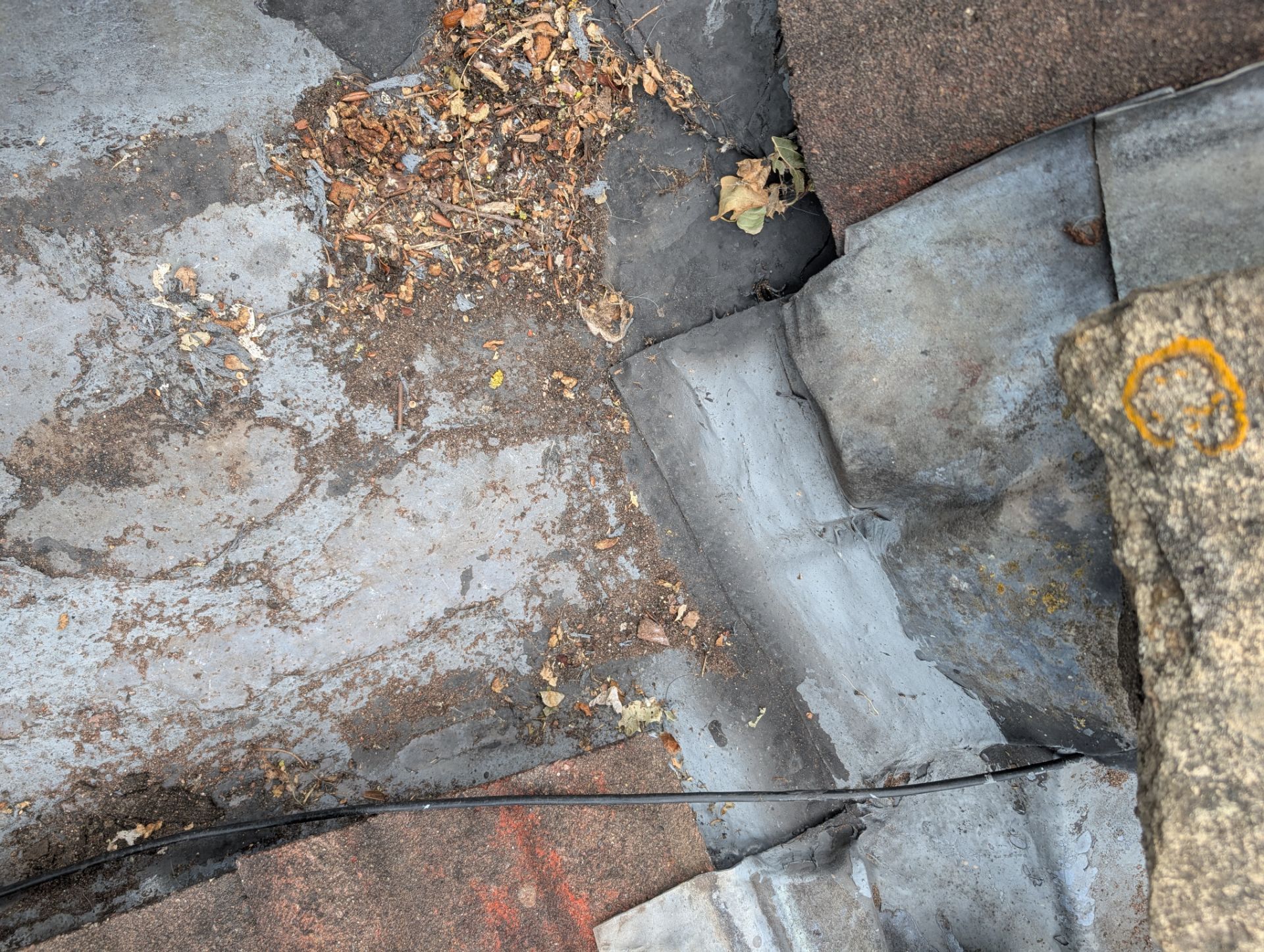
Lead Valleys
A valley is the internal angle where two roof slopes meet and direct water toward a downpipe. Lead-lined valleys are common on older Winchester properties, and the lead needs to be of adequate width, correctly lapped, and free to move as it expands and contracts with temperature. The main failure modes:
Cracking through thermal fatigue. Lead expands significantly with heat (about 3mm per metre between winter cold and summer heat), and if it's fixed in a way that prevents this movement, it cracks. Lead that's been nailed down, pointed over, or trapped under tiles develops fatigue cracks that allow water through.
Lead that's too thin or too narrow. The code of lead (its thickness) and the width of the valley both matter - undersized lead gets damaged more easily and doesn't provide adequate water clearance in heavy rain. Code 4 is the minimum for most valley applications; Code 5 is better for larger valleys or steeper pitches.
Build-up of debris. A valley that fills with leaves, moss, and organic debris retains moisture against the lead, accelerates deterioration, and eventually restricts water flow. Keeping valleys clear is part of roof maintenance.
Chimney and Abutment Flashings
Where a chimney stack rises through the roof slope, a set of flashings seals the junction: stepped flashings up the sides of the chimney, an apron at the front, and a back gutter behind. In abutment situations (where a lean-to or extension roof meets a house wall), a continuous flashing runs along the wall-to-roof join.
Roof Repairs Winchester handles lead repairs across Winchester as a regular part of its work, and the most common failure is the raggle joint - the horizontal slot cut into the mortar joints of the masonry where the lead is tucked in. When the mortar in the raggle deteriorates, the lead lifts away from the wall and the seal is lost. Repointing the raggle and re-dressing the lead correctly restores the seal; simply applying mastic or sealant over the gap doesn't.
Soakers
Soakers are small pieces of lead tucked beneath each individual slate or tile at a wall abutment or in a roof valley without a separate lead lining. They're invisible in normal use but essential to the weatherproofing of the junction. When soakers fail or are missing, the first indication is often a series of damp patches that seem unrelated to any single obvious failure point.
What Repairs Cost in Winchester
- Lead valley strip replacement (per linear metre): £80-£150
- Chimney flashing replacement (full set, front + sides + back): £400-£800 depending on chimney size and access
- Abutment flashing repair or replacement: £200-£500 depending on length
- New soakers at a wall abutment: usually priced as part of a wider repair job
Access adds to these figures for anything requiring scaffolding or a tower.
We've covered what to check after storm damage in Winchester elsewhere - valleys and flashings are often the first place storm-related water ingress occurs, because any pre-existing weakness in the lead is typically what fails first under heavy rain or wind-driven water.
FAQ
Q: How do I know if my Winchester roof has a lead valley problem?
Damp patches in upper rooms or a loft near the valley position, particularly after heavy rain, are the clearest indicator. Visible standing water in the valley, or debris build-up that's stopping the valley draining properly, are also signs. Lead that's cracked or has opened at laps is sometimes visible from the ground in a steeply pitched valley.
Q: What code of lead should be used for roof valleys in Winchester?
Code 4 is the minimum for most valley situations; Code 5 is recommended for larger valleys, shallower pitches, or areas of high rainfall. Code 3 (used in some older installations) is undersized for most valley applications and should be upgraded when a valley is being replaced.
Q: Can lead flashings be repaired rather than replaced?
Minor issues - a failed raggle joint, a small crack at a lap - can often be addressed with localised repair. Lead that's cracked through fatigue across a wide area, or that has become very thin through oxidation, is usually more cost-effectively replaced than repaired, since the remaining lead will continue to deteriorate.
Q: How long does new lead flashing last in Winchester?
Properly installed Code 4 or 5 lead should last 60-80 years, and some Victorian lead in Winchester properties is still serviceable after a century. The raggle mortar joints will likely need repointing before the lead itself needs replacement.
Ready to work with Roof Repairs Winchester?
Let's connect! We’re here to help.
Send us a message and we’ll be in touch.
Or give us a call today at 01962 462074
Agency Contact Form
More Marketing Tips, Tricks & Tools