Loft Condensation and Roof Ventilation in Winchester: Why Period Roofs Suffer and What Fixes Cost
A damp loft with no leak in it is one of the more infuriating problems a Winchester homeowner can have, mostly because the obvious explanation is wrong and the actual fix is a planning question. Water running down the underside of the felt in February, black spotting on the rafter feet, insulation that squeezes like a sponge - none of that needs a hole in the roof. It is condensation, and Winchester gets a specific version of it because so much of the housing here is period property in a conservation area where you cannot simply screw a row of vents through the slates. The city sits in a chalk valley with the Itchen running through it, humidity holds high from November to March, and the historic core alone contains hundreds of listed buildings. Here is why it happens and what the fixes actually cost.
What Is Actually Happening Up There
Warm air holds more moisture than cold air. A household of four puts roughly 10 to 15 litres of water vapour into the air every day through cooking, washing, showering and drying clothes indoors. That air rises and escapes through every gap in the ceiling: the loft hatch, downlighters, the gap where the soil pipe passes through, badly sealed pipe boxing.
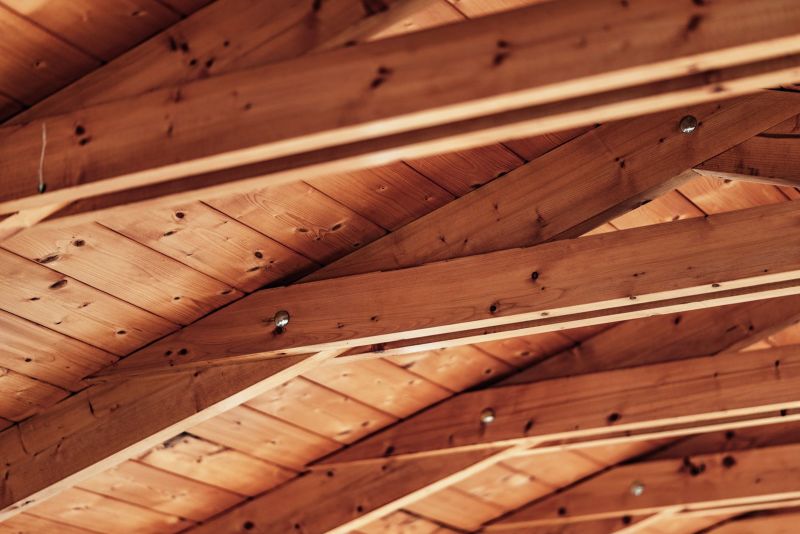
In the loft it meets the coldest surface in the house. On a clear January night the underside of a roof covering can sit a degree or two below the outside air temperature because it radiates heat to a clear sky. The moisture drops out of suspension onto the timber and the membrane.
Do that for four months a year and you get sodden insulation, mould on the rafters, corroded nail plates and eventually genuine rot. If you have found damp up there and want it diagnosed properly rather than guessed at, you can arrange a survey through the Winchester Roof Repairs website.
Why Winchester Roofs Are Particularly Prone
Three local factors stack up.
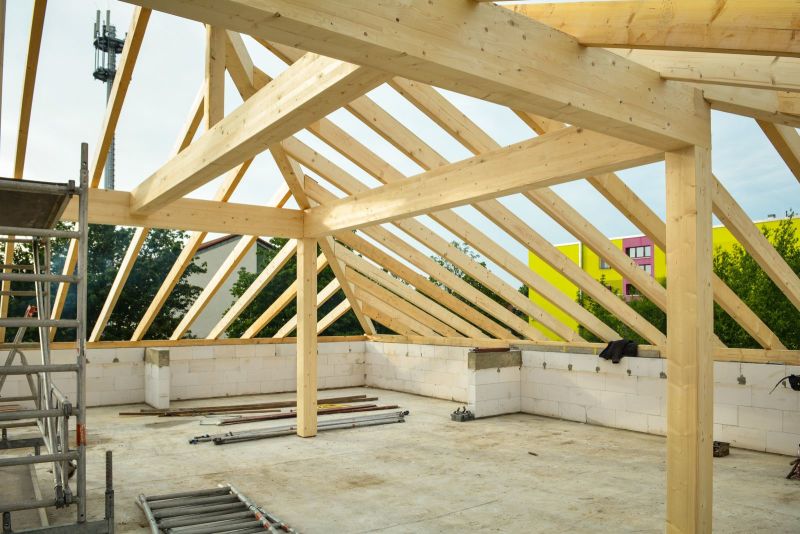
The first is what the roofs were. Winchester's Victorian and Georgian stock, the flint and brick cottages in Hyde and around St Cross, and the older properties in Alresford, Twyford and the surrounding villages were slated or clay-tiled onto battens with no underlay at all. Air moved through them constantly. They were leaky by design and they never suffered condensation because of it.
The second is what was done to them. Re-roofing from the 1960s onwards fitted bitumen felt or a non-breathable membrane underneath, which sealed that accidental ventilation shut. Nobody added replacement vents because nobody thought it was needed. That single change is behind most of the damp lofts we see in Winchester.
The third is the valley. Winchester sits in the Itchen valley on chalk, with the river and its water meadows at the bottom of it. Relative humidity through the winter months regularly holds above 85%, and the mild south Hampshire climate - hard frosts are relatively few here - means the loft never gets the sharp dry cold that would clear it out.
The Insulation Trap
This one catches people out because the thing that caused it was a good idea.
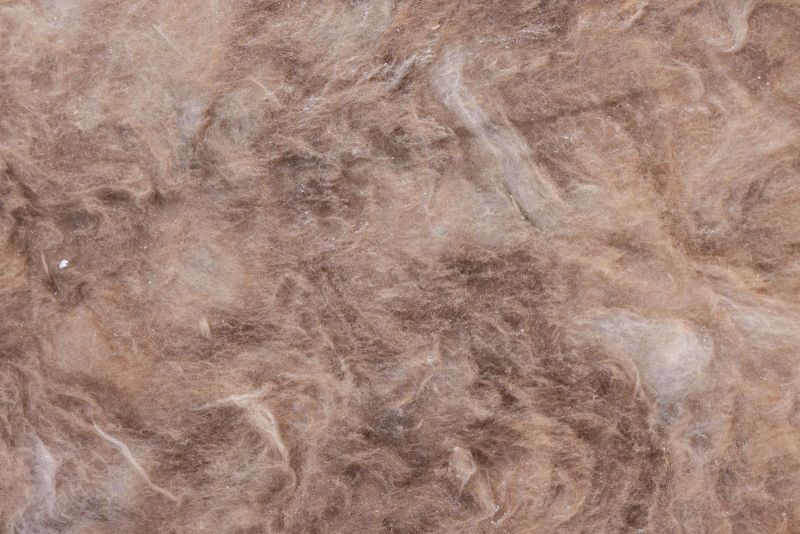
Through the 2000s and 2010s a great many Winchester homes had loft insulation topped up under subsidised schemes, going from 100mm to 270mm or more. The house got warmer, the bills went down, and the loft got colder, because less heat now leaked up into it.
The problem is the eaves. If insulation is pushed hard out to the wall plate it blocks the ventilation gap completely. Colder loft, less airflow. Both changes push it towards condensation, and the two together push it over the edge.
Eaves ventilation trays restore a 25 to 50mm airflow path over the insulation. They cost £6 to £12 each supplied and £350 to £800 to fit across a typical Winchester loft, and on a fair number of jobs that alone solves it. We look at the insulation side of the equation in our guide to roof insulation in Winchester and what it costs.
The Listed Building and Conservation Area Problem
Here is where Winchester differs from almost anywhere else in Hampshire.

The standard fix elsewhere is a handful of tile or slate vents dotted up the slope plus over-fascia vents at the eaves. On a listed building, or in one of Winchester's conservation areas, that can be a problem, because vents are a visible alteration to the roof.
Listed building consent is required for works affecting the character of a listed building, including its roof covering, and doing it without consent is a criminal offence rather than a planning irregularity. In conservation areas, permitted development rights for roof alterations can be restricted, and Article 4 directions apply in places. Winchester City Council's planning service will confirm what applies to a specific address, and general planning permission guidance sets out the wider position.
What conservation officers usually accept
The good news is that this is a well-trodden path and there are solutions that get approved.
Ventilation at the eaves, using over-fascia or soffit vents, is almost always acceptable because it is barely visible from ground level. Ridge ventilation formed within a traditional mortar-bedded ridge is often accepted where a modern dry ridge system would not be. Vents placed on a rear or hidden slope rather than the principal elevation are frequently agreed. And slate vents in a matching natural slate, rather than a moulded plastic unit, are a much easier conversation.
What rarely gets through is a row of obvious plastic tile vents across a front elevation in the historic core. Ask first. Retrofitting the right solution costs less than removing the wrong one and reinstating the roof.
What the Fixes Cost in 2026
Winchester area working figures:
- Eaves ventilation trays fitted throughout a loft: £350 to £800
- Over-fascia vents, per linear metre: £22 to £40
- Soffit vent strips retrofitted: £300 to £650 depending on run
- Slate or tile vents, each fitted: £120 to £240
- Natural slate vents to match a period roof: £180 to £320 each
- Ventilated ridge formed in traditional mortar bedding: £60 to £110 per metre
- Positive input ventilation unit in the loft: £550 to £1,000 installed
- Full re-roof with breathable membrane and eaves ventilation: £9,000 to £22,000
Approved Document C and Approved Document F within the government's Approved Documents set the requirement, and the working rule for a pitched roof is continuous ventilation equivalent to a 10mm gap at the eaves on both slopes, with a 5mm equivalent at the ridge on low-pitch roofs. That equivalence is why scattering four tile vents about achieves very little. Air needs a way in and a way out.
Do the Free Things Before the Paid Things
Before anyone quotes for roof work, reduce what is going up there in the first place.
Seal the loft hatch. A compression seal and an insulated back costs under £40 and closes the single largest moisture route into most lofts.
Check where the bathroom and kitchen extractor ducts terminate. We still find flexible ducting ending loose above a ceiling in Winchester houses, pumping shower steam directly into the roof space. If the duct vanishes into the loft and does not visibly emerge through a tile vent or a wall, that is your problem, and it is a £130 to £300 fix.
Stop drying washing indoors on radiators where you can. A single wet load releases around 2 litres of water into the house, and BRE research on domestic moisture has consistently found indoor drying to be one of the biggest single contributors.
Then, if next winter is still wet up there, look at ventilation. In that order.
Frequently Asked Questions
Is my damp loft condensation or a leak?
Condensation spreads evenly across the underside of the roof, is worst on cold clear mornings, and concentrates near the eaves and on the north-facing slope. A leak is localised, follows rainfall rather than temperature, and leaves a stained track down a specific rafter. If the whole loft is damp, it is almost always condensation.
Can I fit roof vents on a listed building in Winchester?
Not without listed building consent, which is required for works affecting the character of the building including the roof covering. Conservation officers commonly accept eaves and soffit ventilation, vents on hidden slopes, and natural slate vents matching the existing covering. Obvious plastic vents on a principal elevation in the historic core rarely get approved.
How much does it cost to fix loft condensation in Winchester?
Most cases resolve for £400 to £1,400 using eaves ventilation trays, soffit or over-fascia vents and a few tile or slate vents. Matching natural slate vents on a period roof push the upper end higher at £180 to £320 each. Adding a positive input ventilation unit takes it to around £1,500 to £2,500.
Did extra loft insulation cause my condensation problem?
It can contribute. Topping up from 100mm to 270mm makes the loft colder, and if the insulation was pushed out over the wall plate it also blocked the eaves ventilation gap. Both effects together commonly tip a previously dry loft into condensation. Fitting eaves trays restores the airflow without losing the insulation benefit.
Ready to work with Roof Repairs Winchester?
Let's connect! We’re here to help.
Send us a message and we’ll be in touch.
Or give us a call today at 01962 462074
Agency Contact Form
More Marketing Tips, Tricks & Tools