Roof Repairs in Romsey: Period Roofs, Common Problems, and Costs
Romsey is a Georgian market town sitting right on the River Test, and its roofs carry the same mix of history and hard water damage you'd expect from a place that grew up around an abbey and a mill town. The conservation area holds around 180 listed buildings - 3 Grade I, 7 Grade II*, and roughly 170 Grade II - so a lot of the roofs above Market Place, Church Street, and The Hundred are 150 to 250 years old and answerable to planning rules most owners don't think about until they need a repair. The town sits low in the Test valley, gets around 750mm to 800mm of rain a year, and the water meadows keep the ground damp, which is exactly the setting that punishes tired tiles, worn lead, and blocked gutters. Add 35 to 45 air frost nights a winter and you have a recipe for slow, quiet leaks. Here's what typically goes wrong on a Romsey roof, and what putting it right actually costs in 2026.
The Roofs You Actually Find Across Romsey
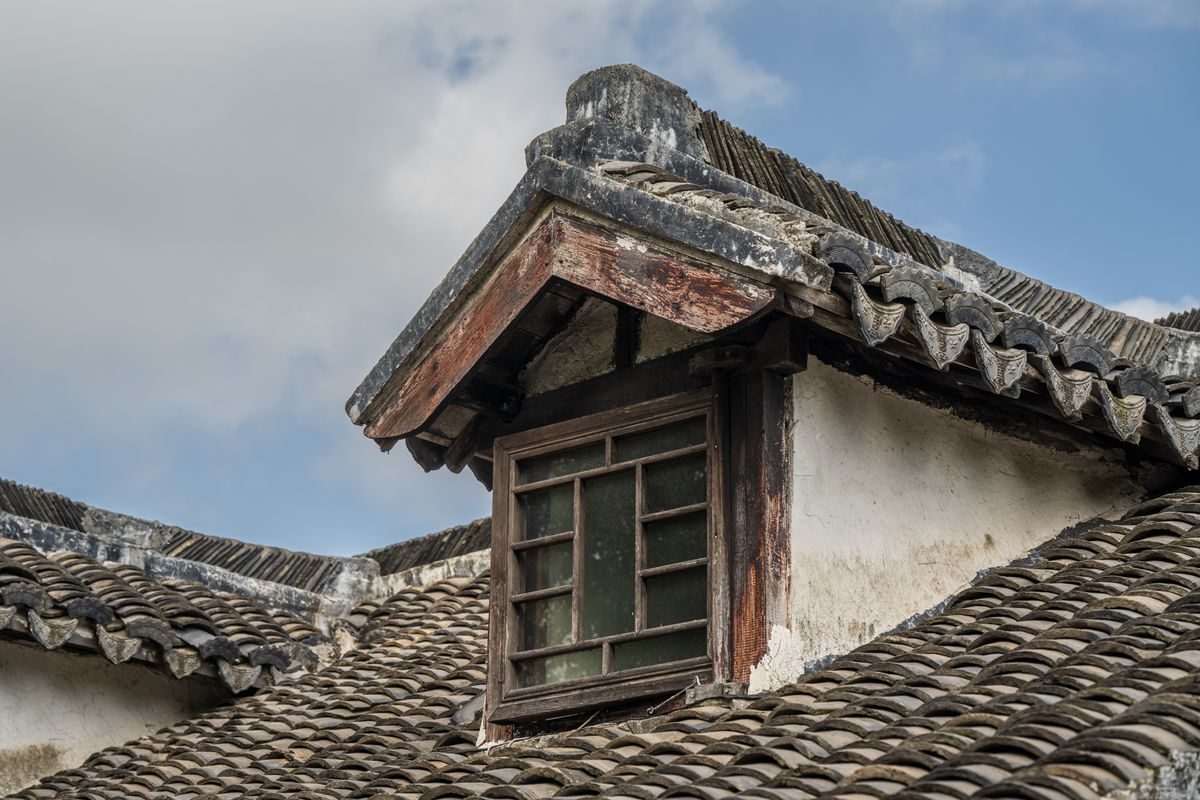
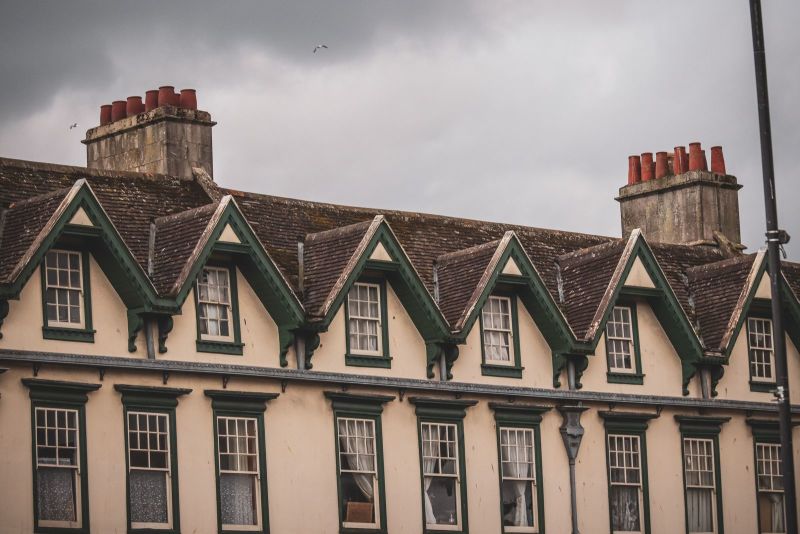
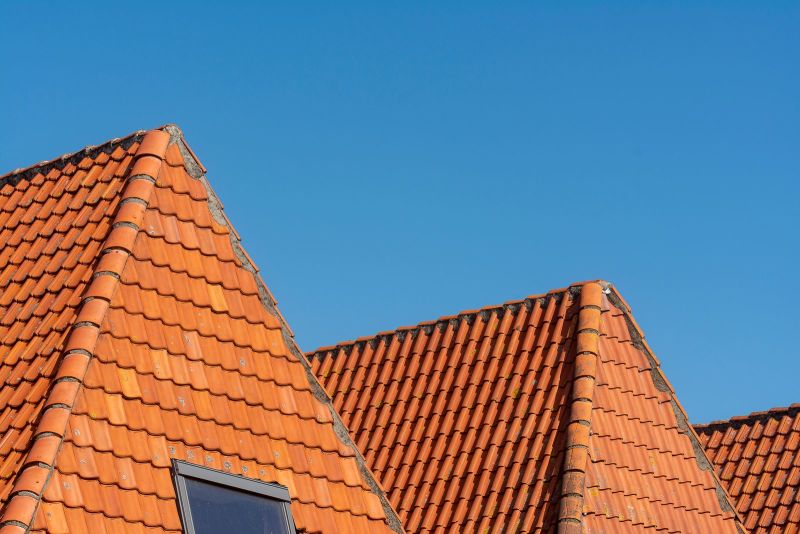
Walk through the centre of Romsey and you're mostly looking at clay plain tiles and Welsh slate. The older brick-and-timber cottages off Church Street and Latimer Street tend to wear handmade clay tiles, while the tall Georgian and Victorian frontages around Market Place and The Hundred often carry natural slate, laid once the railway made it cheap from the 1840s. Plenty of houses carry both, because a slate front over a tiled rear is common where a property was smartened up at some point.
Underneath, the structure is usually softwood rafters on lath, and on around 6 in 10 pre-1900 roofs we inspect there's little or no breathable felt at all. The tiles and the lead are doing the entire weatherproofing job on their own, which is why a single slipped tile turns into a ceiling stain far quicker than it would on a modern house.
Knowing exactly what covering you have, and how much life is left in it, changes every decision that follows. Roof Repairs Winchester covers Romsey and the surrounding Test Valley villages, and a proper survey will tell you whether you're looking at a quick patch, a slope relay, or a full strip before you start collecting quotes.
Conservation Rules: Why Romsey Answers to Test Valley, Not Winchester
Here's a detail that trips up a lot of Romsey owners. Unlike Alresford or Bishop's Waltham, Romsey is not in the Winchester City Council district - it sits within Test Valley Borough Council, so the conservation team, the planning portal, and the case officers are all different. If your neighbour in Winchester gave you advice about their roof consent, it may not apply to your street.
On a listed building, changing the roof covering - swapping clay for concrete, or slate for artificial slate - almost always needs listed building consent, and carrying out that work without it is a criminal offence, not a fine you can shrug off. Even where a house isn't listed, the conservation area lets the council control what shows on the visible slopes, so a rooflight or a material change on a front pitch can need permission where it wouldn't a mile out of town. The government's guide to when you need planning permission is worth a read before you commit, and Historic England's overview of what listed building status means in practice explains why like-for-like repair is treated so differently from alteration.
We go into the consent side in far more depth in our guide to roof repairs on listed buildings and what the rules actually cost you, which is worth reading if your Romsey home is listed. In practice, budget an 8 week minimum for a consent decision, and expect around 1 in 3 heritage roofing jobs in the conservation area to need some form of consent or a conversation with the case officer first.
The Test Valley Damp Problem Romsey Roofs Fight
Romsey's setting is beautiful and slightly cruel to roofs. The town sits in a river valley on chalk, the water table is high, and the air near the Test and the town's mill streams stays damp for long stretches of the year. That constant moisture feeds moss and algae, and around 7 in 10 north-facing Romsey slopes we look at carry a heavy moss load that traps water against the tiles.
Moss itself doesn't destroy a roof overnight, but it holds moisture, and every frost then expands that water inside the tile surface. Over 15 to 20 winters that freeze-thaw cycle spalls the face off a clay tile and delaminates a slate. Blocked gutters and valleys make it worse, because water that can't drain sits and soaks. It's no coincidence that the majority of Romsey leak call-outs we get trace back to a junction or a gutter that stopped draining, not to a hole in the open roof.
The practical lesson is that Romsey roofs need their gutters and valleys kept clear more than a drier inland town would. Clearing moss and keeping water moving is cheap insurance against a four-figure repair.
Common Faults on Romsey's Period Roofs
Old roofs fail in fairly predictable ways, and the damp valley climate speeds most of them up. The usual suspects, roughly in the order we see them:
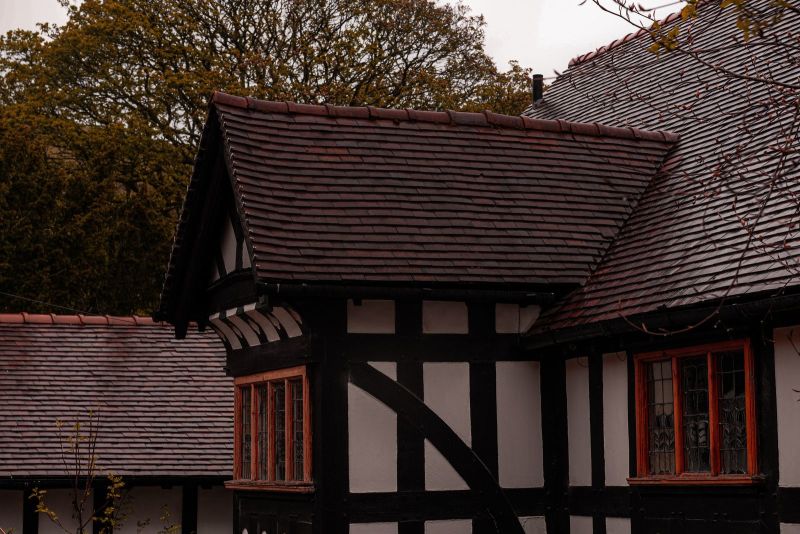
Slipped and cracked tiles. On a clay roof that's a century old, 1 to 3% of tiles being cracked, spalled, or slipped at any one time is completely normal. Frost finds any tile that has taken on water and splits it over a winter or two.
Failed mortar at ridges and verges. Bedding mortar at the ridge and gable dries out and cracks, letting ridge tiles rock loose. Re-bedding is typically needed every 20 to 30 years.
Blocked valleys and gutters. In a damp valley town this is the number one cause of interior leaks, not the open slope.
Rot in the timbers. Where water has been getting in quietly for years, rafter feet and wall plates soften, and you often don't see it until a ceiling stains or a bargeboard sags.
The point is that most Romsey roof problems are junction and detail problems, not whole-roof failures. Catching them early is the difference between a £250 visit and a four-figure repair.
Chimneys, Lead, and the Junctions That Leak First
The leadwork is where most Romsey roofs actually let water in. Valleys where two slopes meet, the flashings around chimney stacks, and the soakers tucked between tiles at a wall all take far more punishment than the open roof, and on a Georgian house that lead can be a hundred years old.
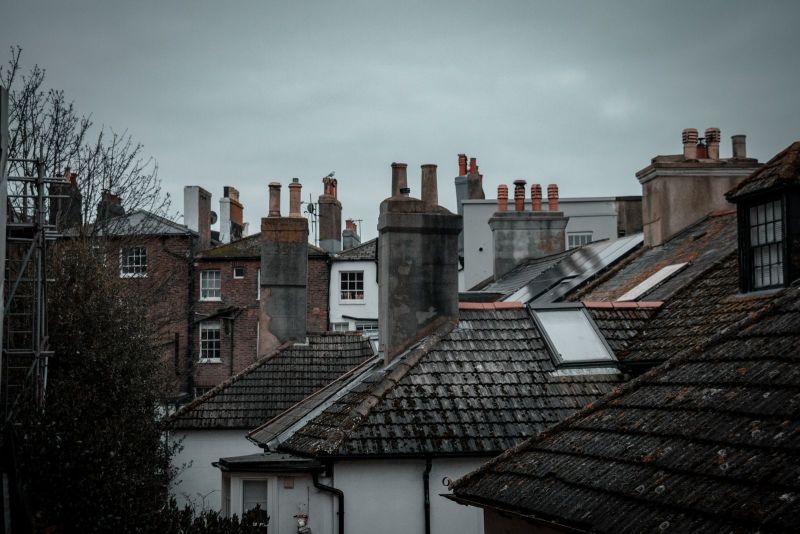
Lead moves about 3mm per metre between a cold night and a hot summer roof, so if it's been nailed solid, pointed over, or trapped under tiles it fatigues and cracks along the fold. Mortar in the raggle - the slot cut into the chimney where the flashing tucks in - crumbles and lets the lead lift away. The wrong fix is a smear of mastic over the gap; the right one is re-dressing the lead and repointing the joint properly. For most valley and flashing work Code 4 lead is the minimum and Code 5 is better on wider valleys or shallow pitches. Laid properly, new lead should give 60 to 80 years, and plenty of Victorian lead in Romsey is still doing its job after a century.
Romsey has a lot of tall, exposed chimney stacks on its Georgian frontages, and around 4 in 10 of the damp-near-a-chimney jobs we quote come down to failed flashing or perished pointing on the stack rather than anything wrong with the roof itself.
What Roof Repairs Cost in Romsey (2026)
Prices vary with access, scaffold, and how much genuine heritage work a job involves, but as a 2026 guide for the Romsey area:
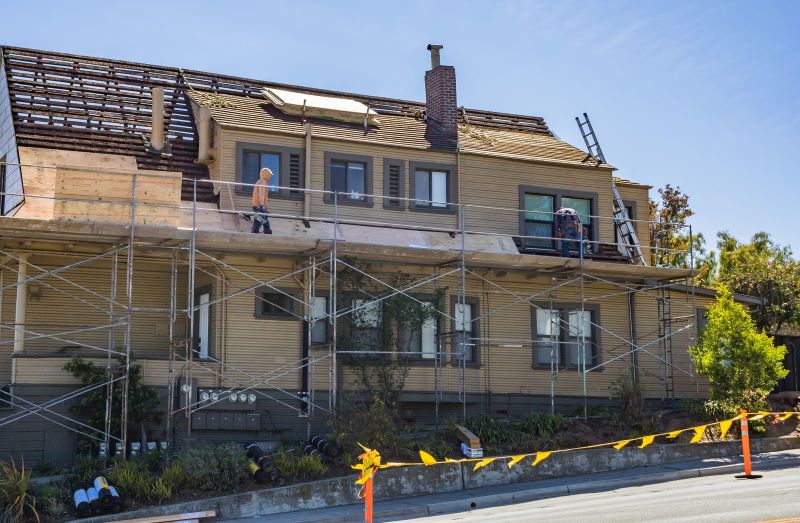
Replace a few slipped or cracked tiles/slates: £150 - £400 for a short visit.
Re-bed a ridge (per linear metre): £40 - £90.
Clear and re-point a valley: £250 - £600 depending on length and access.
Full chimney flashing set (front, sides, back gutter): £400 - £900 depending on stack size and access.
Repoint a chimney: £500 - £1,200.
Strip and relay a slope, salvaging sound tiles: £180 - £320 per square metre.
Full roof strip and relay on a period semi: roughly £9,000 - £20,000, more if the timbers need attention.
Scaffolding on a Market Place terrace with no side access can add £900 to £2,500 on its own, so always check whether that's in the quote. Prices for the same job around Romsey routinely vary 30 to 50% between firms, largely on how much tile salvage they've assumed, so ask each one what percentage of the covering they expect to reuse. On a period roof, 70 to 85% of the original clay tiles or slates can usually be saved and re-laid, which keeps both the cost and the conservation officer happy.
Choosing a Roofer Who Knows Period Property
Period roofs need someone who has actually worked on handmade clay, natural slate, and traditional lead, not a firm whose day job is concrete interlocking tiles on new-build estates. Ask to see photos of comparable local jobs, and ask specifically whether they've dealt with Test Valley's conservation team before, because on a listed Romsey property that experience saves weeks.
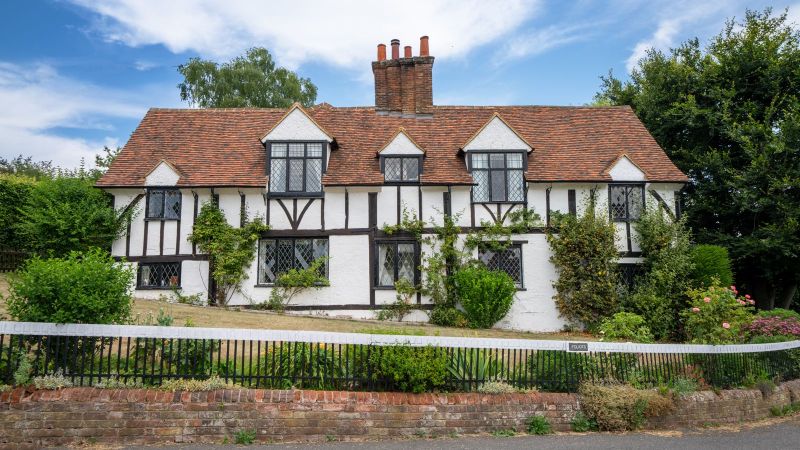
Check credentials properly. The National Federation of Roofing Contractors' find-a-member search lets you confirm a firm has passed the NFRC's office and site audit, and the government-backed TrustMark register of vetted tradespeople lets you check a firm has been independently assessed. Get at least three written quotes, and be wary of anyone who won't put the scope in writing or wants a big cash deposit up front.
Finally, don't let anyone talk you into stripping a sound roof. On a Romsey period home, careful repair and selective relay almost always beats wholesale replacement, both for your wallet and for the character of the building.
---
FAQ
Q: Do I need permission to repair my roof in Romsey's conservation area?
A: Like-for-like repairs using the same materials usually don't need permission, but changing the covering, adding rooflights on a visible slope, or altering the roofline often does, especially on a listed building. Romsey's conservation area holds around 180 listed buildings, and permitted development rights are often restricted. Remember Romsey falls under Test Valley Borough Council, not Winchester City Council, so check with the correct conservation team before you start. Doing consent-required work without it on a listed building is a criminal offence, and around 1 in 3 heritage roofing jobs in the area needs some form of consent.
Q: How much does it cost to repair a period roof in Romsey?
A: As a 2026 guide, replacing a few slipped tiles costs £150 to £400, re-pointing a valley runs £250 to £600, a full chimney flashing set is £400 to £900, and repointing a chimney is £500 to £1,200. Stripping and relaying a slope while salvaging sound tiles is around £180 to £320 per square metre. Scaffolding on a Market Place terrace with no side access can add £900 to £2,500 on its own, so always check whether it's included in the quote.
Q: Why do Romsey roofs suffer so much from moss and damp?
A: Romsey sits low in the Test valley on chalk, with a high water table and mill streams keeping the air damp for much of the year. Around 7 in 10 north-facing slopes we inspect carry a heavy moss load that traps water against the tiles, and each frost then expands that water and spalls the surface. Blocked gutters and valleys make it worse, which is why most Romsey leak call-outs trace back to a junction that stopped draining rather than a hole in the open roof.
Q: Should I repair or fully replace an old roof in Romsey?
A: Repair almost always wins on a period home. If under about 15 to 20% of the fixings on a slope have failed, targeted repair is more economical than replacement, and when a relay is genuinely needed, 70 to 85% of the original clay tiles or slates can usually be reused. Full replacement only makes sense once widespread nail sickness or timber decay has set in. A proper survey will tell you which camp your roof is in.
---
Ready to work with Roof Repairs Winchester?
Let's connect! We’re here to help.
Send us a message and we’ll be in touch.
Or give us a call today at 01962 462074
Agency Contact Form
More Marketing Tips, Tricks & Tools